
Event & Yagna Details
- Home
- Event & Yagna
Preparatory Samskaras
Date: To Be Announced
Muhurta: Early Morning
Purification rites, sankalp, and spiritual preparations conducted to sanctify participants and the yagna space before commencement.
Principal Yagna Day
Date: To Be Announced
Muhurta: Abhijit Muhurta
The central Vedic ceremony with sacred homa, ahuti, mantra recitation, and royal sankalp performed under auspicious planetary alignment.
Purnahuti Ceremony
Date: To Be Announced
Muhurta: Midday Auspicious Hora
Final sacred offerings and prayers invoking divine blessings, cosmic balance, and fulfillment of the yagna’s spiritual objectives.
Ashirvachan & Pravachan
Date: To Be Announced
Muhurta: Evening Session
Discourses by Acharyas and saints sharing spiritual insights, blessings, and the deeper meaning of the Rajsuya Maha Yagna.
- Sacred Venue
Location, Yagna Bhoomi & Temple Premises
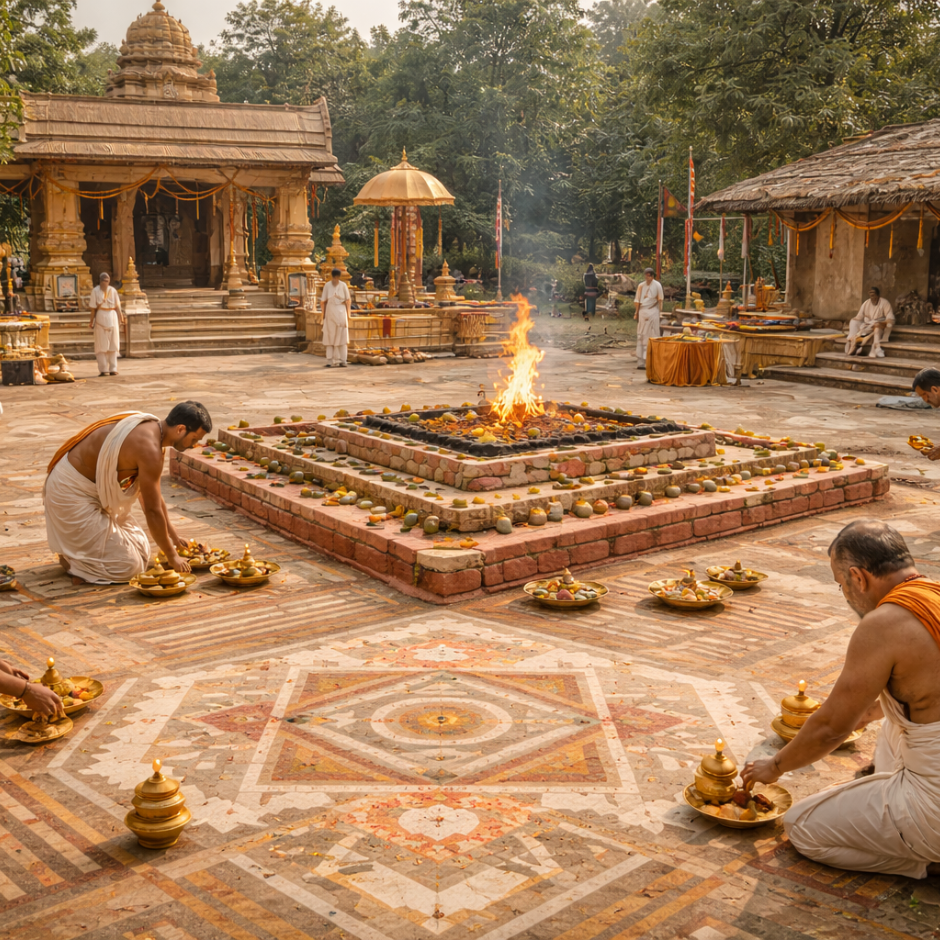
The Rajsuya Maha Yagna is conducted at a sanctified yagna bhoomi within holy temple premises, designed for spiritual purity and divine alignment.
Yagna Bhoomi
The consecrated Yagna Bhoomi is prepared through bhumi pujan, vastu alignment, and Vedic mantras, forming the spiritual center of the Rajsuya Maha Yagna.
Temple Premises
The holy temple environment enhances spiritual focus, mantra resonance, and devotional energy, creating a sanctified atmosphere for all sacred observances.
Assembly Area
Designated spaces allow devotees and volunteers to engage in seva, prayers, and collective sankalp while maintaining order and ritual discipline.
- Sacred Timeline
Day-wise Yagna Schedule
A structured day-wise schedule outlining sacred rituals, ceremonies, and spiritual activities conducted throughout the Rajsuya Maha Yagna.
Day 1
Title: Purification & Sankalp
Time: Early Morning – Evening
Bhumi pujan, kalash sthapana, sankalp vidhi, and initial purification rites preparing the yagna bhoomi and participants.

Day 2
Title: Agni Sthapana
Time: Morning – Afternoon
Establishment of the sacred fire, homa initiation, mantra recitation, and preliminary ahutis under auspicious muhurta.
Day 3
Title: Main Rajsuya Rituals
Time: Full Day
Core Rajsuya Maha Yagna procedures, royal sankalp, extensive homa, offerings, and Vedic chantings led by Ritviks.
Day 4
Title: Anushthan & Discourses
Time: Morning – Evening
Continuous mantra anushthan, spiritual discourses, blessings by Acharyas, and collective prayers for loka-kalyan.
Day 5
Title: Purnahuti & Ashirvachan
Time: Midday – Evening
Final sacred offerings, Purnahuti ceremony, and concluding blessings invoking peace, prosperity, and universal harmony.
- Devotee Care
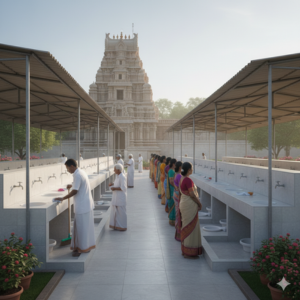
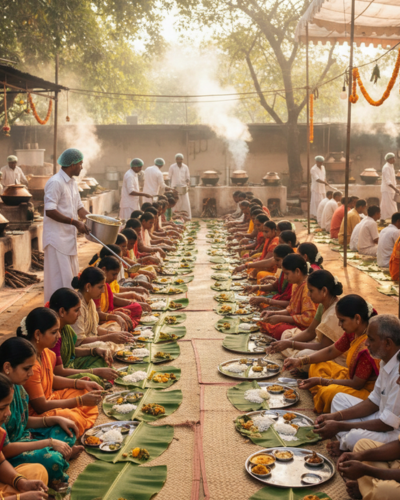
Accommodation, Bhojan & Facilities
Comfortable accommodation, satvik bhojan, and essential facilities are thoughtfully arranged to support devotees throughout the Rajsuya Maha Yagna.

- Origins
Aatri, Devotee & Seva Guidelines
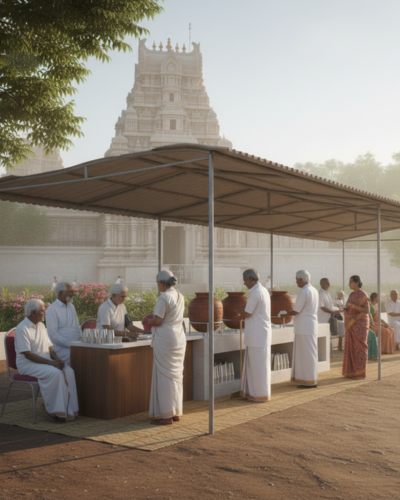
Guidelines to ensure discipline, purity, safety, and harmonious participation of yatris, devotees, and seva volunteers during the Rajsuya Maha Yagna.
The Yatri, Devotee & Seva Guidelines are established to preserve the sanctity, order, and spiritual focus of the Rajsuya Maha Yagna. All participants are requested to observe discipline, cleanliness, and respectful conduct within the yagna bhoomi and temple premises. Dress should be modest and appropriate to a sacred environment, reflecting simplicity and devotion. Silence and attentiveness during rituals help maintain the vibrational purity necessary for effective mantra chanting and offerings.
Seva volunteers play a vital role in the smooth functioning of the yagna. They are expected to serve selflessly with humility, punctuality, and obedience to instructions given by Acharyas and coordinators. Cooperation among yatris, devotees, and volunteers ensures safety, comfort, and collective spiritual upliftment. By following these guidelines, every participant contributes to a harmonious atmosphere where divine energies can manifest fully, allowing the Rajsuya Maha Yagna to fulfill its purpose of loka-kalyan, peace, and universal harmony.
Do’s
Maintain silence and reverence within the yagna and temple premises
Wear clean, modest, and traditional attire suitable for sacred rituals
Follow the instructions of Acharyas, priests, and seva coordinators
Keep the premises clean; use designated areas for waste disposal
Arrive on time for rituals, seva duties, and scheduled programs
Offer seva with humility, devotion, and selfless intent
Respect fellow yatris, devotees, elders, and volunteers
Keep personal belongings minimal and secure
Don’ts
Do not use mobile phones during rituals or inside sacred areas
Do not consume alcohol, tobacco, or any intoxicating substances
Do not wear inappropriate or revealing clothing
Do not speak loudly, argue, or disturb ongoing rituals
Do not enter restricted areas without permission
Do not waste food, water, or sacred offerings (prasadam)
Do not photograph or record rituals without prior approval
Do not bring non-vegetarian food into the premises