
Knowledge & Learning Center
- Home
- Knowledge & Learning Center
- Sacred Wisdom
Articles on Yagnas, Vedas & Dharma

The Spiritual Science
of Yagnas
An insightful exploration of Yagnas as sacred rituals that harmonize cosmic energies, purify the environment, and uplift human consciousness. Learn how Yagnas function as a bridge between the material and the divine realms.

Vedic Foundations
of Rajasuya Yagna
This article delves into the Vedic origins of the Rajasuya Yagna, highlighting its mentions in the Rigveda, Yajurveda, and Brahmanas, and explaining its role in establishing dharmic leadership and universal balance.

Dharma in Ritual and
Daily Life
Understand how Dharma is not limited to rituals alone but extends into daily conduct, governance, and social responsibility. This piece connects the philosophy of Dharma with the deeper purpose of sacred Yagnas.
- Sacred Wisdom
Articles on Yagnas, Vedas & Dharma
Explore in-depth articles that illuminate the spiritual science of Yagnas, the eternal knowledge of the Vedas, and the righteous path of Dharma. This section presents authentic insights drawn from ancient scriptures, traditional commentaries, and living practices, guiding seekers toward harmony, purpose, and divine alignment.
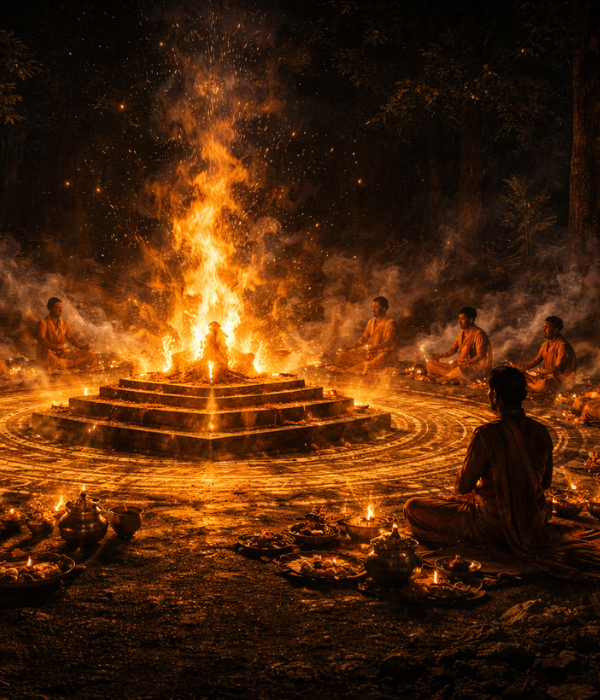
What is Rajasuya Yagna?
Rajasuya Yagna is a highly revered Vedic royal sacrifice performed to establish righteous authority, spiritual sovereignty, and universal harmony. It symbolizes leadership guided by Dharma and devotion to divine law.
Who can participate in the Rajasuya Yagna?
All devotees, seekers, and well-wishers may participate according to prescribed guidelines. While certain rituals are performed by qualified priests, participation through prayers, offerings, and Sankalpa is open to all.
What are the spiritual benefits of Rajasuya Yagna?
The Yagna is believed to bestow peace, prosperity, clarity of purpose, social harmony, and spiritual elevation. It purifies the environment and strengthens collective consciousness.
Is prior spiritual knowledge required to attend?
No prior knowledge is required. The rituals and their meanings are explained in a simple and respectful manner so that everyone can connect with the sacred process.
How long does the Rajasuya Yagna last?
The duration depends on scriptural prescriptions and the scale of the Yagna. It may span several days, with each phase carrying specific spiritual significance.
How can I offer my Sankalpa or prayers?
Devotees may submit their Sankalpa during registration or through designated spiritual coordinators. Names and intentions are ceremonially included in the Yagna as per Vedic tradition.
What materials or offerings are used in the Rajasuya Yagna?
The Yagna uses sanctified Vedic offerings such as Samidha (sacred wood), ghee, grains, herbs, and mantras prescribed in the Vedas. Each offering carries symbolic meaning and contributes to spiritual purification and cosmic balance
- Truth Revealed
Clarification of Myths & Misconceptions
Rajasuya Yagna is only for kings or rulers
While historically associated with righteous kings, the spiritual essence of the Rajasuya Yagna is universal. Today, its performance is intended for collective welfare, dharmic leadership, and the upliftment of society as a whole.
Yagnas are merely symbolic and have no real effect
Vedic scriptures describe Yagnas as precise spiritual sciences involving sound (mantra), intention (Sankalpa), and offering (Ahuti). Their effects are subtle yet profound, influencing consciousness, environment, and inner transformation.
Participation requires deep ritual knowledge
Devotees are not required to know ritual procedures or Sanskrit mantras. Qualified Acharyas conduct the rituals, while participants engage through devotion, prayers, and sincere intent.
Yagnas promote superstition or blind belief
Yagnas are founded on Dharma, discipline, and experiential wisdom, not blind faith. They emphasize awareness, responsibility, and harmony with natural and cosmic laws.
Rajasuya Yagna benefits only individuals
The primary aim of the Rajasuya Yagna is Lok Kalyan—the welfare of all beings. Individual benefits arise naturally from collective harmony and righteous intention.