
Shastras, Scriptures & References
- Home
- Shastras, Scriptures & References
- Scriptural Sources
Authoritative References from Sacred Texts
Rajsuya Maha Yagna is firmly rooted in Vedic literature, validated through authoritative references across ancient sacred texts.

Rigveda
The Rigveda, the oldest of the Vedic scriptures, lays the philosophical and ritual foundation upon which later royal sacrifices such as the Rajsuya Maha Yagna are understood. While the Rajsuya ritual is elaborated more fully in later texts, the Rigveda introduces the core principles that govern it—Ṛta (cosmic order), Agni as the divine mediator, and the sanctity of yajna as a means of sustaining universal balance. Hymns dedicated to Agni, Indra, and Varuna emphasize divine authority, protection, and righteous rule, all essential to kingship sanctified through ritual. The Rigvedic worldview establishes that sovereignty must align with cosmic law and divine will. The spiritual legitimacy later formalized in Rajsuya Yagna draws directly from this Rigvedic vision, where power is validated not by force but by harmony with universal principles.
Yajurveda
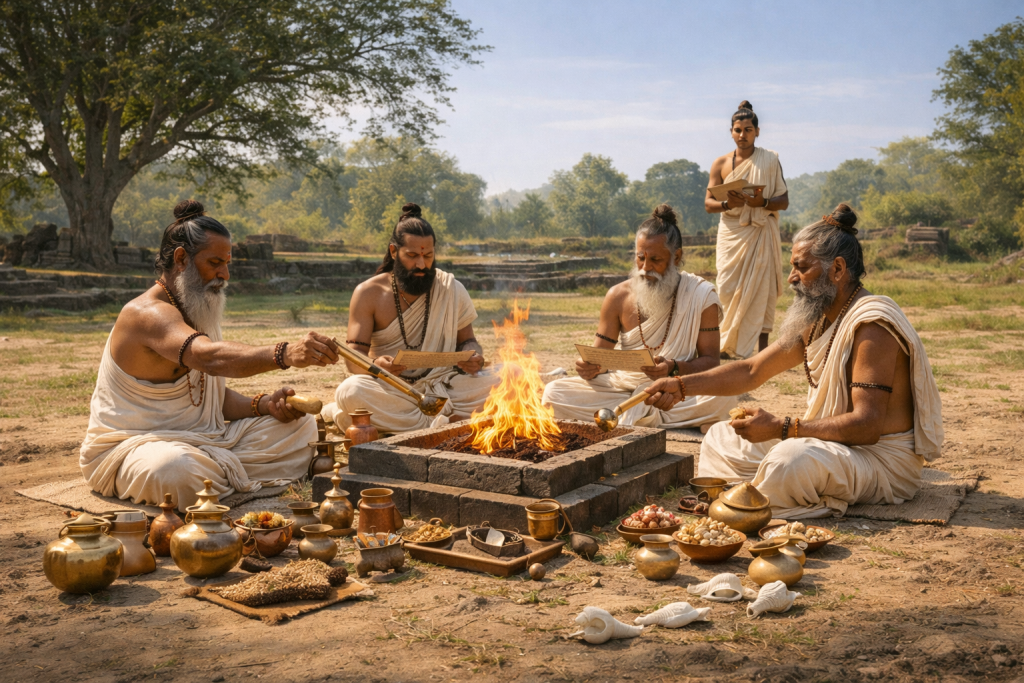
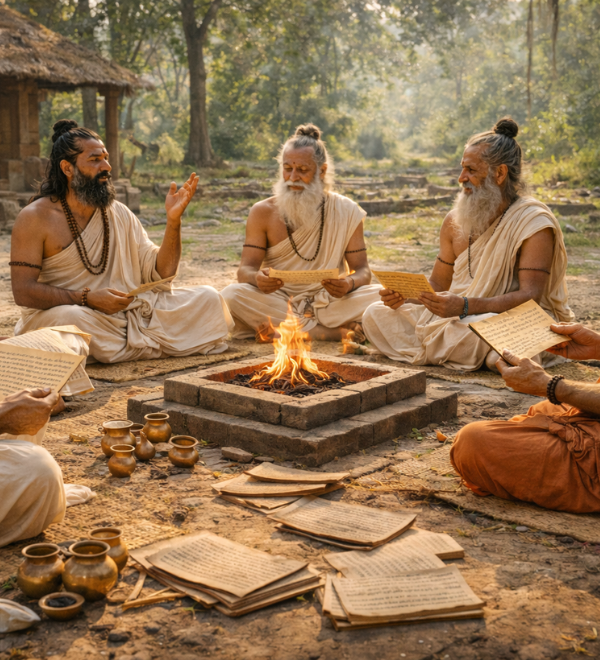
The Yajurveda is the primary ritual manual of Vedic tradition and serves as the most direct textual authority for the Rajsuya Maha Yagna. It provides detailed procedural guidance for sacrificial rites, including mantra formulations, ritual sequencing, and priestly roles. Within its Shukla and Krishna recensions, the Rajsuya is presented as a royal consecration ritual that integrates spiritual discipline with political authority. The Yajurveda emphasizes precision, discipline, and intention, reinforcing the belief that ritual correctness ensures cosmic harmony. Through prescribed offerings and chants, the king symbolically submits to divine law before assuming sovereignty. This text transforms abstract Vedic philosophy into structured ritual practice, making the Rajsuya Maha Yagna an act of sacred governance rather than ceremonial display. Its authority ensures that the ritual remains grounded in authentic Vedic injunctions.
Atharvaveda
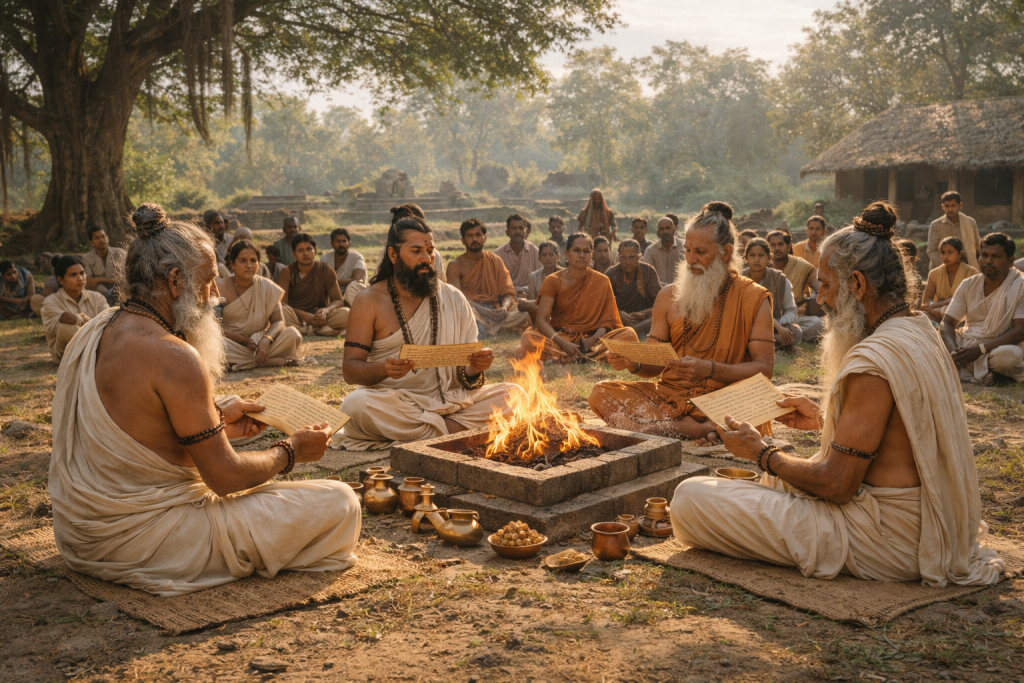
The Atharvaveda contributes a unique dimension to the understanding of Rajsuya Maha Yagna by emphasizing societal stability, protection, and well-being. Unlike the Rigveda’s cosmic hymns or the Yajurveda’s ritual precision, the Atharvaveda addresses human concerns such as harmony, health, protection from disorder, and moral balance. Its mantras focus on safeguarding the ruler, the kingdom, and the people from internal and external threats. In the context of Rajsuya, this Veda reinforces the idea that kingship exists for lok kalyan—the welfare of all. The Atharvavedic vision ensures that sovereignty is not isolated from social responsibility. By invoking peace, protection, and ethical order, it complements the Rajsuya Yagna’s objective of sustaining harmony across society, nature, and governance.
Mahabharata
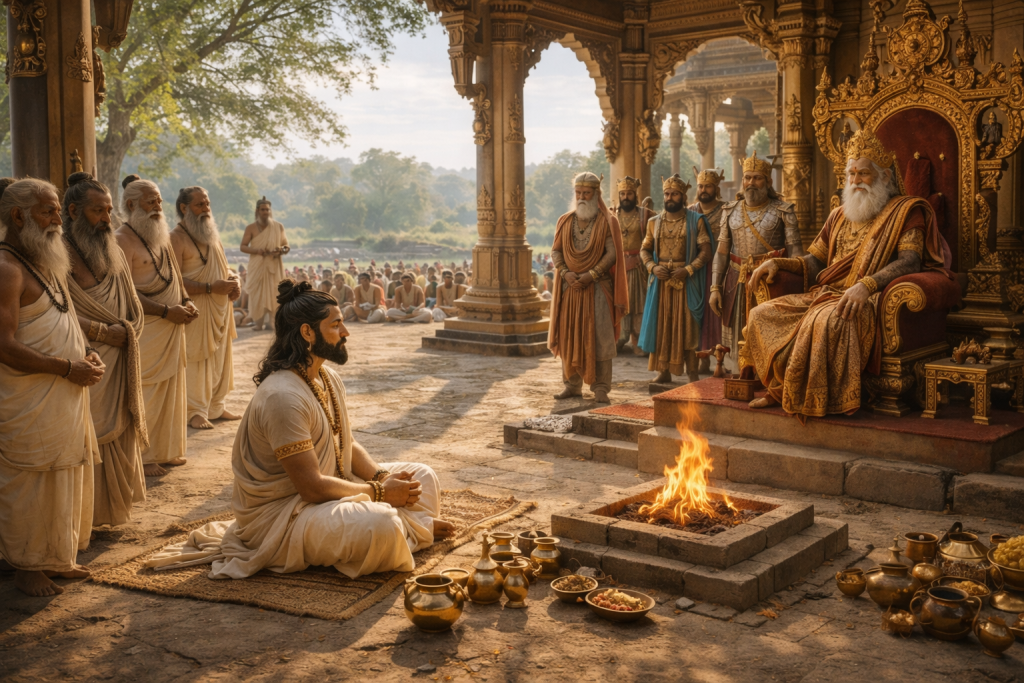
The Mahabharata offers the most vivid narrative depiction of the Rajsuya Yagna, most notably through the Rajsuya performed by King Yudhishthira. In this epic, the ritual is portrayed not merely as a royal ceremony but as a moral test of leadership. Yudhishthira’s Rajsuya emphasizes humility, righteousness, and responsibility, demonstrating that true sovereignty arises from dharma rather than ambition. The epic contextualizes the ritual within complex social, political, and ethical dynamics, highlighting both its grandeur and its challenges. By embedding the Rajsuya within a living narrative, the Mahabharata makes its philosophical meaning accessible and relevant. It reinforces the idea that ritual authority must be accompanied by moral conduct, compassion, and adherence to truth, offering a timeless ethical framework for leadership.
Brahmanas & Upanishads
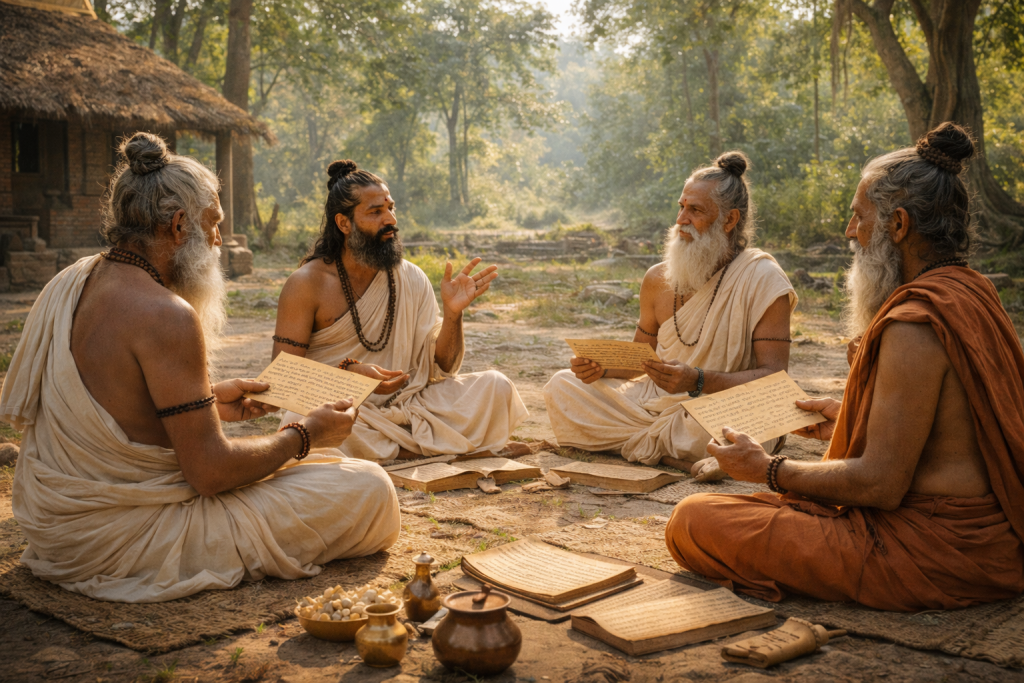
The Brahmanas and Upanishads provide the theological and philosophical depth necessary to fully comprehend the Rajsuya Maha Yagna. The Brahmanas meticulously explain ritual symbolism, priestly functions, and sacrificial meanings, transforming physical acts into cosmic processes. They establish the Rajsuya as a ritual reenactment of universal order. The Upanishads, meanwhile, elevate this understanding by shifting focus inward, emphasizing self-knowledge, consciousness, and ultimate reality (Brahman). Together, these texts ensure that Rajsuya is not reduced to ritual formalism. Instead, it becomes a bridge between outer action and inner realization. Authority, according to these texts, arises when the external ritual aligns with internal wisdom. This synthesis secures the Rajsuya Maha Yagna’s enduring spiritual relevance beyond historical kingship.
Vedic Insights
- Dharma, Ritual, Leadership, Harmony, Wisdom
- Scholarly Perspectives
Interpretations by Vedic Scholars
Ritualist Interpretation
Traditional Vedic ritualists, particularly those aligned with the Karma-Kāṇḍa school, interpret the Rajsuya Maha Yagna as a precise sacrificial mechanism designed to uphold cosmic and social order. Scholars such as those commenting on the Shatapatha Brahmana emphasize that every action, mantra, and offering carries exact symbolic and metaphysical consequences. According to this view, the power of the Rajsuya does not lie in symbolism alone but in flawless execution. The king’s legitimacy emerges through correct ritual performance, ensuring alignment with Ṛta (cosmic law). Errors in procedure are believed to disrupt harmony, affecting rainfall, prosperity, and stability. This interpretation underscores discipline, priestly authority, and textual fidelity, asserting that ritual is an objective force capable of sustaining the universe when performed in accordance with Vedic injunctions.
Dharmic Interpretation
Scholars rooted in Smriti literature and epic traditions, including interpretations from the Mahabharata and later dharma texts, view the Rajsuya Maha Yagna primarily as a moral and ethical declaration of kingship. According to this perspective, the ritual gains validity only when the ruler embodies dharma, humility, and responsibility toward subjects. The Rajsuya is not merely a ritual confirmation of power but a public moral contract between the king, society, and the cosmos. Scholars highlight Yudhishthira’s Rajsuya as the ideal model, where righteousness precedes sovereignty. This interpretation stresses that ritual without ethical governance is hollow. Authority, therefore, flows from moral conduct rather than ritual grandeur alone. The Rajsuya becomes a test of character as much as a sacred rite.
Philosophical Interpretation
Upanishadic scholars interpret the Rajsuya Maha Yagna through an inward, philosophical lens, emphasizing consciousness over ceremony. From this viewpoint, the ritual is symbolic of the inner consecration of the self rather than external kingship alone. The king represents the disciplined mind, the sacrificial fire symbolizes awareness, and the offerings signify ego surrender. Scholars argue that true sovereignty arises when the ruler realizes Brahman and governs with detachment and wisdom. This interpretation does not reject ritual but reframes it as a preparatory stage toward self-knowledge. The Rajsuya, therefore, becomes a metaphor for inner mastery and alignment with universal truth. Authority is valid only when external power reflects inner realization. This philosophical reading preserves the ritual’s relevance beyond monarchy and historical context.
- Highlights
Key Features of Rajsuya Yagna

Agni Mantra
Invokes Agni, the sacred fire, as the divine messenger connecting to gods. Reciting this mantra sanctifies offerings and amplifies spiritual energy during rituals.
Om Swaha
A universal offering mantra used during yajnas. It invokes purity and aligns the practitioner with cosmic vibrations, fostering harmony and devotion.
Ṛtanga Mantra
Focuses on maintaining cosmic order (Ṛta). Chanting ensures alignment of the king, priests, and participants with universal principles during the Rajsuya Yagna.
Dharma Raksha Mantra
A protective mantra emphasizing dharma. Reciting it safeguards moral and ethical conduct for individuals, rulers, and society during sacred ceremonies.
Lok Kalyan Mantra
Invoked for the welfare of all beings. This mantra channels spiritual energy for peace, prosperity, and collective well-being during the yagna.
Samhita Mantra
Derived from the Yajurveda, this mantra guides precise ritual performance. It empowers priests and participants to maintain purity and discipline throughout the yajna.