
Yagna Vidhi & Ritual Framework
- Home
- Yagna Vidhi & Ritual Framework
- Ritual Preparation
Preparatory Samskaras & Pre-Yagna Observances
Essential samskaras and observances are performed to purify participants, sanctify the space, and ensure the Rajsuya Yagna’s efficacy.
Preparatory Samskaras
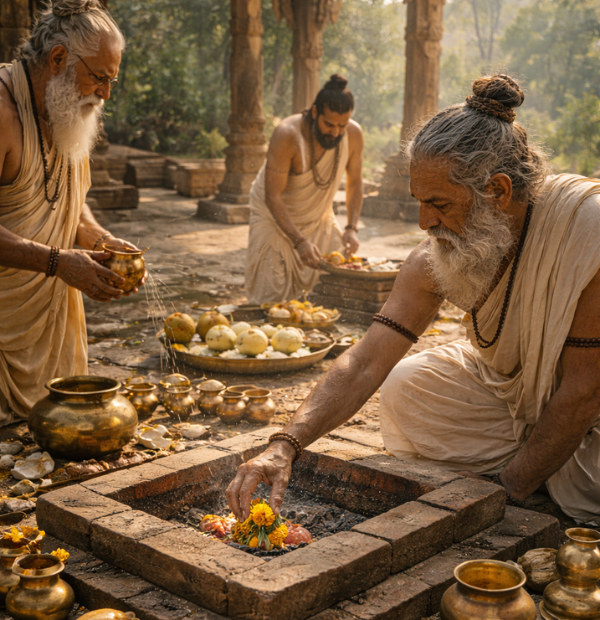
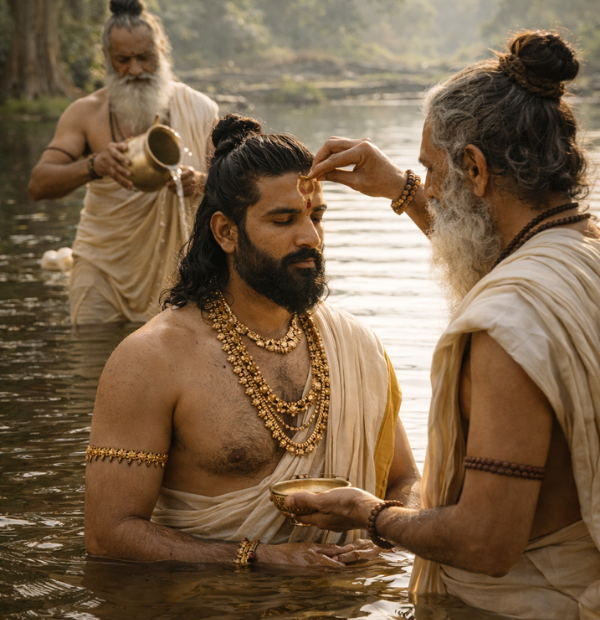
Preparatory samskaras are traditional purification rites performed on the king, priests, and participants before the Rajsuya Yagna. These include ritual baths, fasting, mantra recitation, and meditation to cleanse the body, mind, and spirit. Wearing sacred garments, applying tilak, and observing silence are also part of these samskaras. The aim is to elevate consciousness, align intentions with dharma, and prepare participants to engage fully with the ritual. Each samskara reinforces moral discipline, spiritual focus, and inner readiness, ensuring that the sacred actions of the yagna resonate with cosmic order.
Pre-Yagna Observances
Pre-Yagna observances involve preparing the ceremonial ground, arranging ritual implements, and performing small purificatory rituals around the yajna altar. Participants are instructed to maintain ethical conduct, engage in community prayers, and follow strict discipline for several days. Timing of the yagna is also carefully calculated using auspicious astronomical alignments. These observances cultivate unity, reverence, and attentiveness, ensuring that the Rajsuya Yagna unfolds harmoniously. By harmonizing environment, participants, and cosmic timing, pre-yagna observances create a sanctified space conducive to spiritual transformation and successful performance of the ritual.
- Sankalp Vidhi
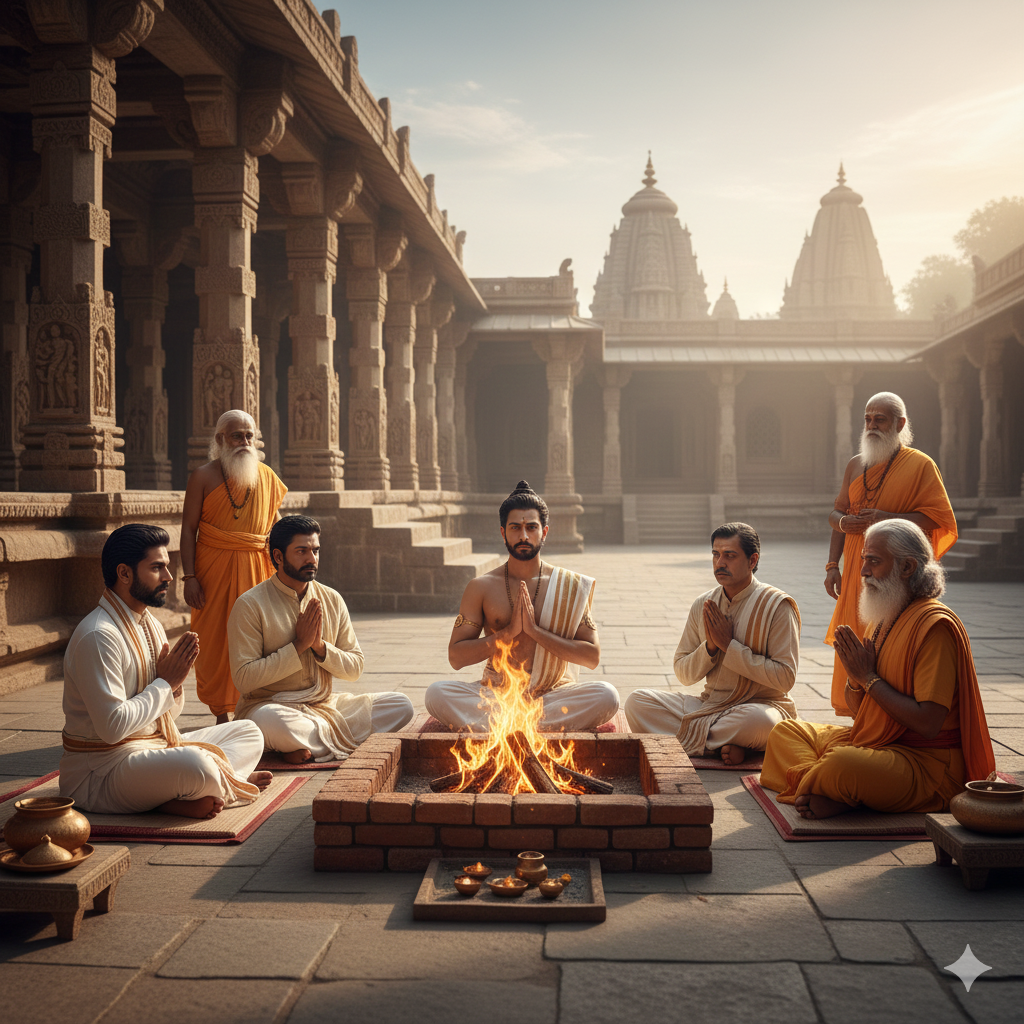
Sacred Resolve
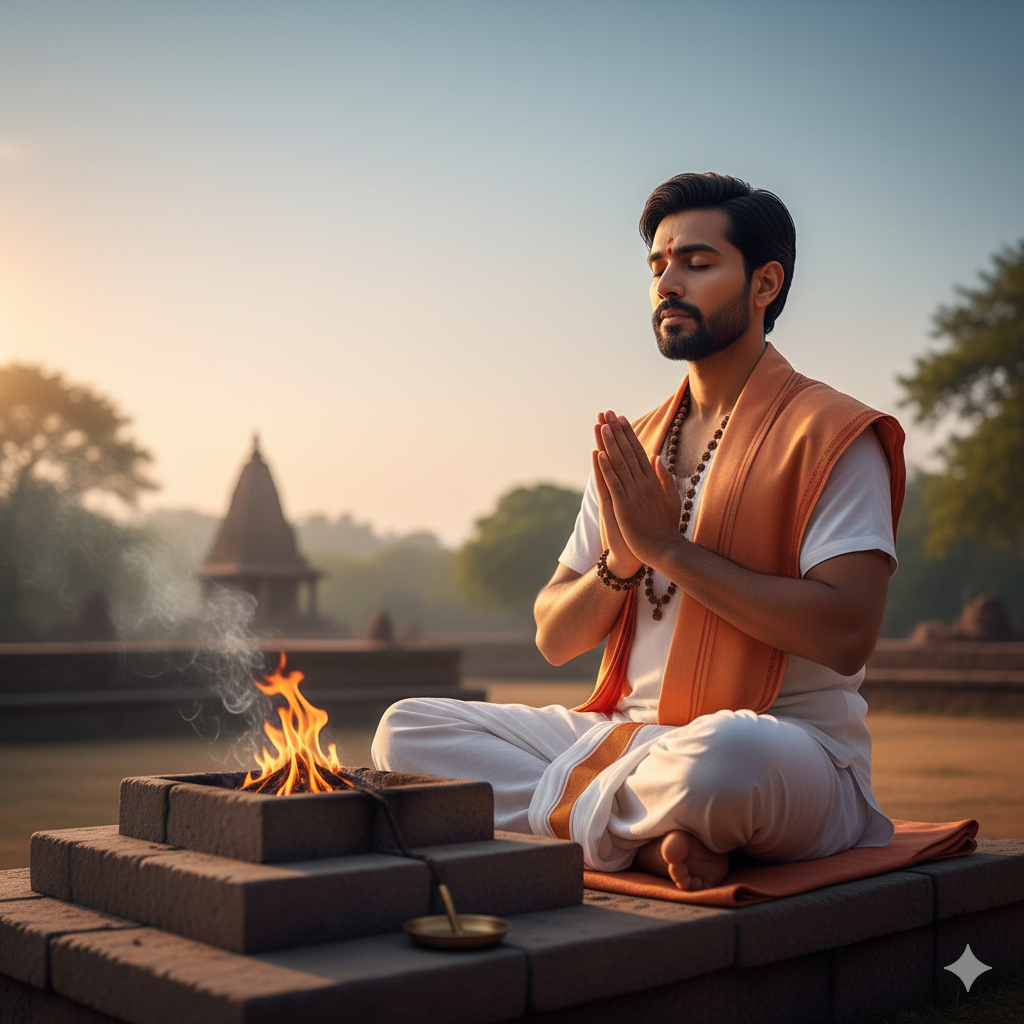
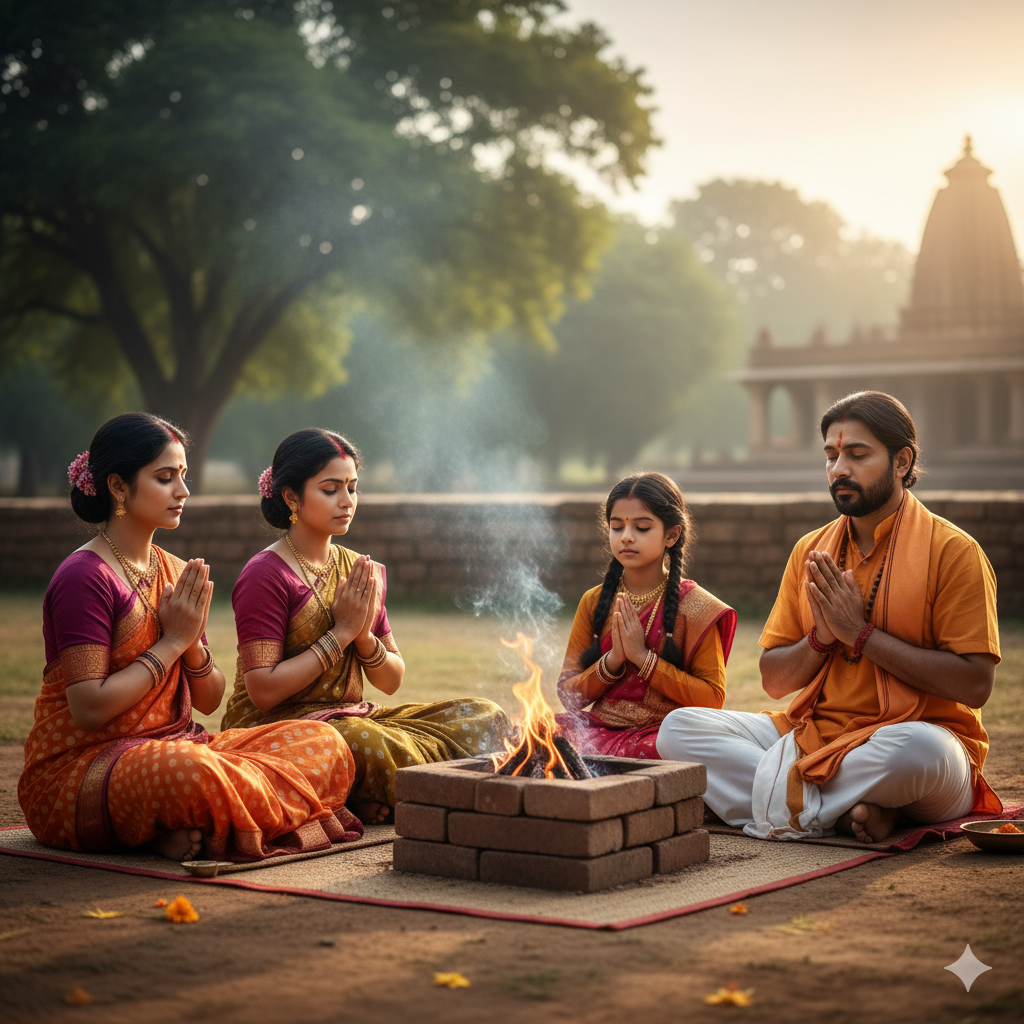
Sankalp Vidhi sanctifies intentions at every level—individual, family, and nation—ensuring participants commit to dharma, unity, and righteous action, creating spiritual alignment before the commencement of the Rajsuya Maha Yagna.
Individual
Personal Sacred Resolve
Family
Collective Spiritual Commitment
Rashtra
National Sacred Pledge
Main Rajsuya Maha Yagna Procedures
The Rajsuya Maha Yagna, as described in Vedic and epic texts, is a grand ritual that sanctifies sovereignty and aligns kingship with cosmic order. The procedure begins with meticulous preparatory rites, including purification of the participants, priests, and the ceremonial space, ensuring alignment with Ṛta, the cosmic law. Sacred fire altars are constructed according to precise Vedic specifications, and ritual implements, offerings, and ceremonial garments are arranged with utmost care. Priests recite Yajurvedic and Rigvedic mantras, invoking Agni and other deities to sanctify the space and participants. The king undertakes personal samskaras such as fasting, meditation, and mantra recitation, symbolizing moral and spiritual readiness. Throughout the yagna, sacrificial offerings—ghee, grains, and other symbolic materials—are offered into the fire, accompanied by prescribed chants. Each stage emphasizes harmony between human action, divine law, and cosmic order, reinforcing the principle that authority and prosperity are valid only when grounded in dharma. The rituals cultivate spiritual energy, purify the environment, and create a sacred atmosphere conducive to divine blessings.
The core of the Rajsuya Maha Yagna involves the formal consecration of the king, a ritual that integrates political, spiritual, and social dimensions. The king is ceremonially enthroned, acknowledging divine authority, moral responsibility, and ethical governance. The yagna includes a series of symbolic offerings, homage to neighboring rulers, and public rituals demonstrating humility, justice, and leadership under dharmic principles. Priests perform intricate rites, including Purohita-led invocations, chanting of mantras for cosmic alignment, and specific sacrificial sequences to honor the deities and ensure universal harmony. The ceremony extends to a broader community, reinforcing social cohesion and collective participation in dharmic observances. Throughout the process, astronomical alignments are considered to ensure auspicious timing, enhancing the ritual’s spiritual potency. Ultimately, the Rajsuya Maha Yagna transforms the king’s authority into a manifestation of dharma, blessing the ruler, the kingdom, and society at large, serving as a timeless model for ethical governance and spiritual leadership.
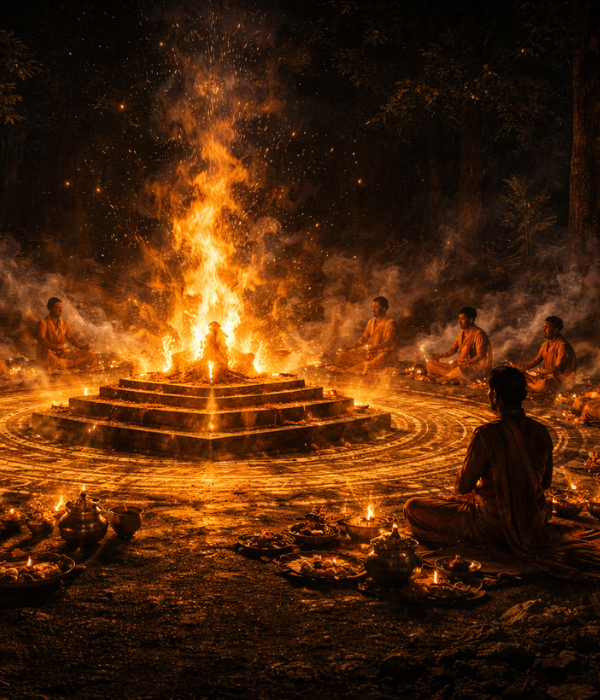
The Rajsuya Maha Yagna is a supreme Vedic ritual that symbolizes the harmonious integration of spiritual authority, kingship, and cosmic order. The ceremony begins with preparatory samskaras for the king, priests, and participants, including ritual baths, meditation, and recitation of sacred mantras to purify mind, body, and spirit. The yajna altar is constructed according to precise Vedic measurements, surrounded by sacred symbols, offerings, and ritual implements. Priests perform invocations to Agni, Indra, and other deities, ensuring the alignment of earthly activities with universal principles. Offerings such as ghee, grains, and aromatic substances are placed into the fire, accompanied by Yajurvedic chants, creating an energetic and sacred atmosphere. The ritual emphasizes moral discipline, spiritual focus, and adherence to dharma, reinforcing that legitimate authority is derived from righteous action and cosmic harmony. Each stage, from initial purification to ceremonial acts, is designed to bless the king, the kingdom, and the community, fostering spiritual, social, and political balance.
- Sacred Fire
Homa, Ahuti & Sacred Offerings

Homa
Homa is the central fire ritual, symbolizing divine connection and channeling spiritual energy into the cosmos during the yagna.

Ahuti
Ahuti involves offering ghee, grains, herbs, and other sacred substances into the fire with precise Vedic mantras for cosmic alignment.

Offerings
Sacred offerings represent devotion, abundance, and purity, sanctifying participants and the kingdom while invoking divine blessings and harmony.
- Sacred Roles
Role of Ritviks, Acharyas & Yajman
Ritviks, Acharyas, and the Yajman play pivotal roles in performing, guiding, and presiding over the Rajsuya Maha Yagna.
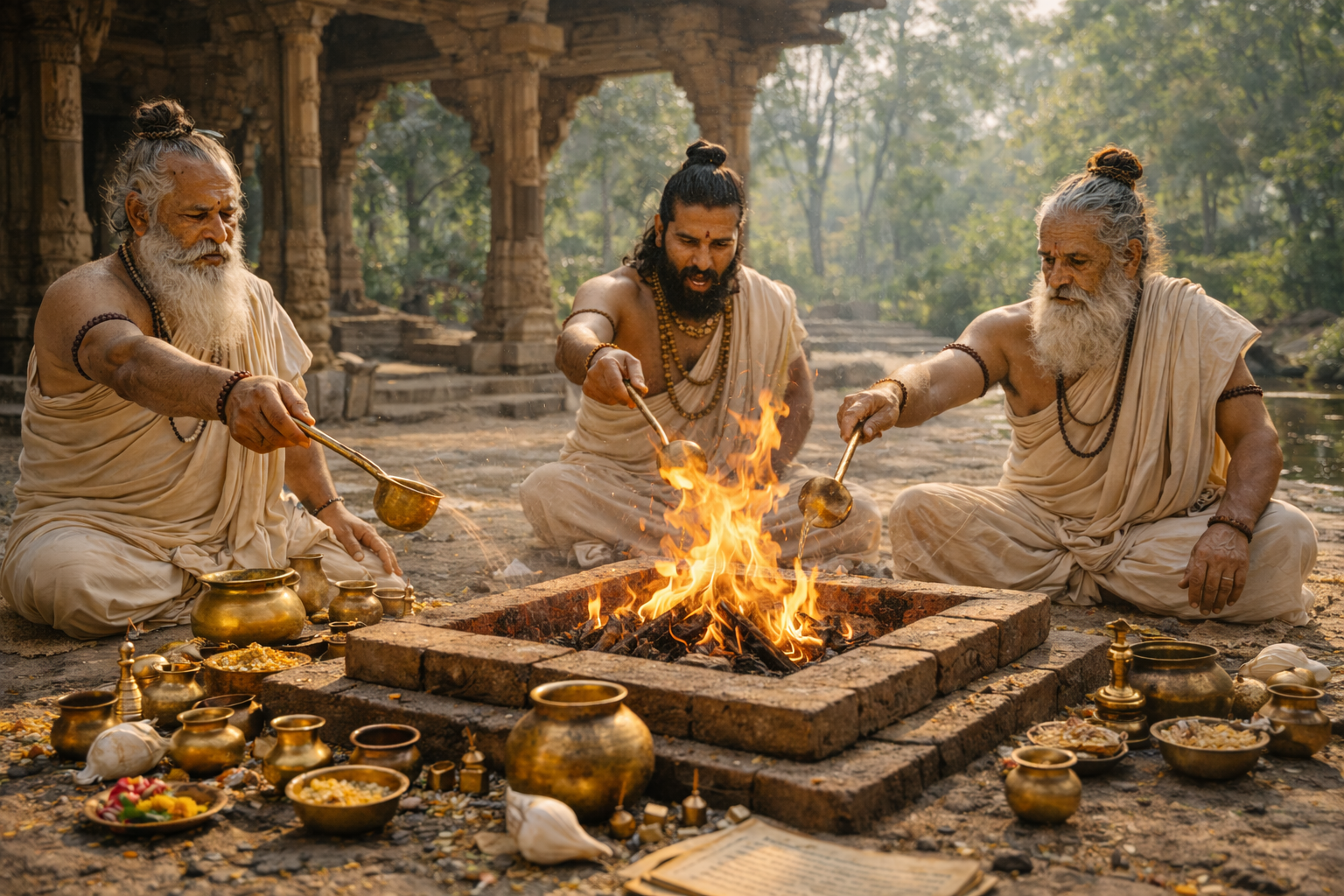
Ritviks are the principal priests responsible for the precise execution of Vedic rituals during the Rajsuya Yagna. They ensure that every mantra, offering, and procedural step is performed according to Vedic injunctions, maintaining the sanctity and cosmic alignment of the ceremony. Their expertise preserves the ritual’s integrity and channels spiritual energy effectively, bridging human action with divine forces.
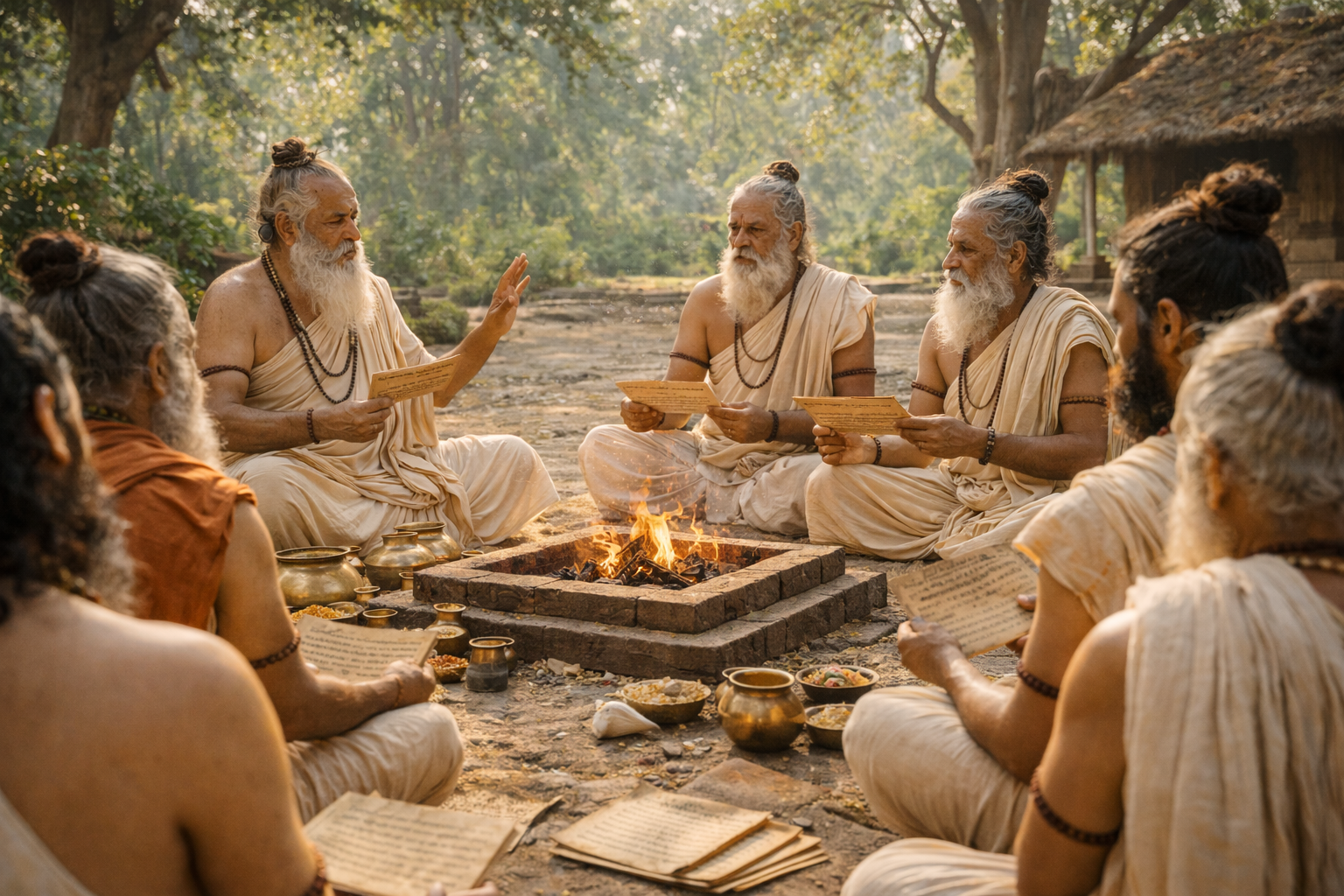
Acharyas serve as teachers and guides, instructing both priests and participants in the deeper spiritual meanings of the yagna. They interpret the sacred texts, provide guidance on ritual conduct, and ensure adherence to dharmic principles. Their wisdom ensures that the ceremony transcends mere procedure and fosters moral and spiritual growth.
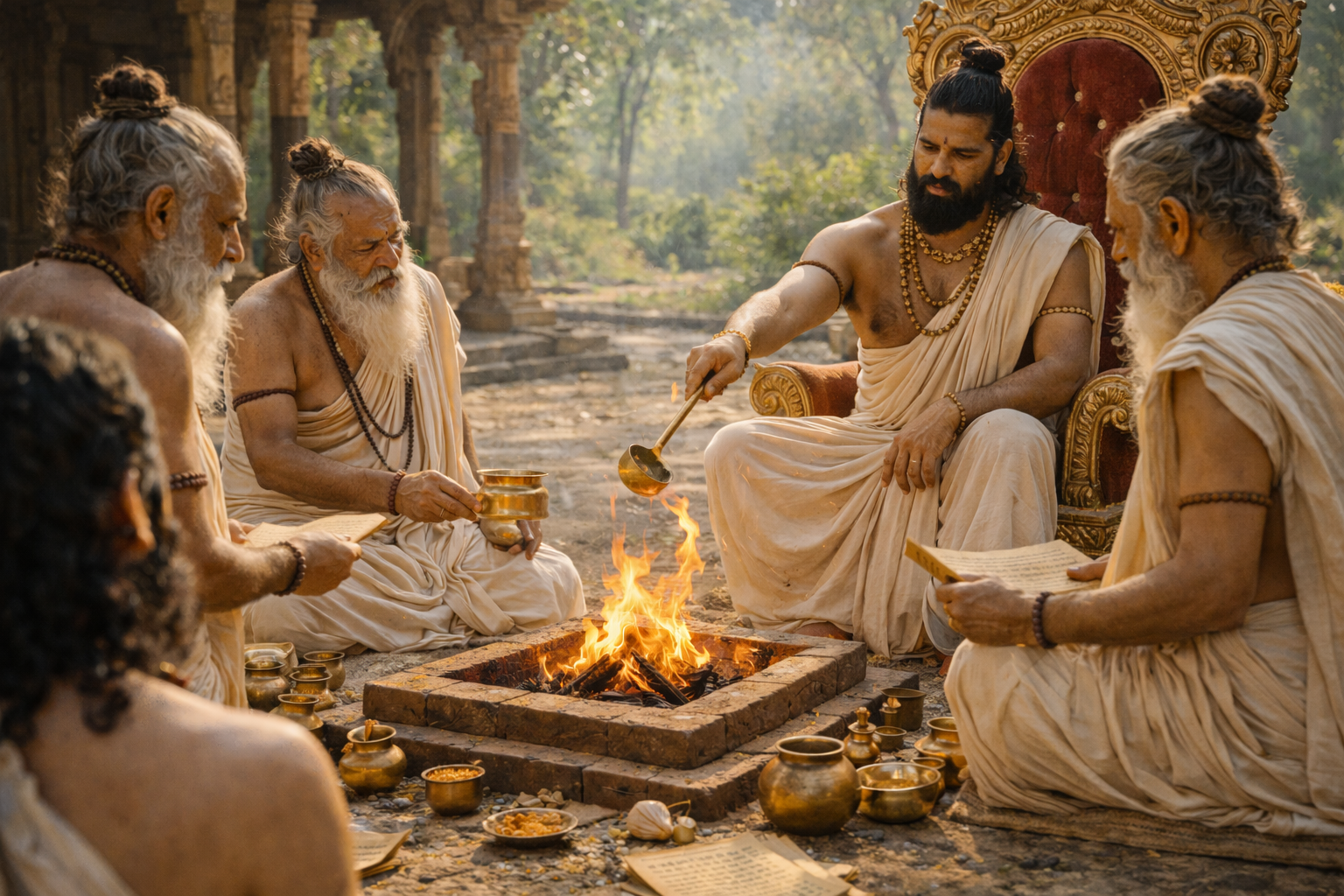
The Yajman, typically the king or presiding figure, represents the collective intention of participants and society. By performing personal samskaras, making offerings, and following guidance from the Ritviks and Acharyas, the Yajman embodies dharma, leadership, and devotion, completing the sacred triad essential for a successful Rajsuya Maha Yagna.
- Sacred Completion
Post-Yagna Anushthan & Purnahuti
Post-Yagna Anushthan and Purnahuti mark the sacred completion of the Rajsuya Yagna, sealing blessings, gratitude, and cosmic fulfillment.
After the main Rajsuya Maha Yagna rituals conclude, Post-Yagna Anushthan is performed to stabilize and preserve the spiritual energy generated during the ceremony. These concluding observances include thanksgiving prayers, final mantra recitations, and charitable offerings to Brahmins and the needy. The participants observe discipline, humility, and silence, ensuring that the sanctity of the yagna is respectfully honored. This phase helps integrate the divine energy into daily life, transforming ritual potency into sustained dharmic influence for individuals and society.
Purnahuti is the final and most significant offering made into the sacred fire, symbolizing completeness, fulfillment, and divine acceptance of the yagna. It represents the harmonious conclusion of all ritual actions, invoking peace, prosperity, and universal welfare. With the chanting of concluding mantras, the sacred fire is respectfully concluded, and blessings are invoked for humanity, the nation, and the cosmos. Purnahuti affirms that the Rajsuya Maha Yagna has been successfully accomplished in alignment with dharma and cosmic order.